Extending an Existing Patio or Back Porch: Add On, Cover It, or Rebuild?
If your existing patio or back porch is solid, level and draining away from the house, adding on is usually the smart move. If the space is sound but too hot to use, cover it. If the slab is cracked, sinking or pitched toward your foundation, rebuilding gives you a better result than patching onto a failing base.
Most homes around Fort Worth came with a small concrete pad off the back door. It works for a grill and two chairs, but it rarely fits the way families actually want to live outside. Before you call anyone, it helps to know which of the three paths fits your yard, because that choice shapes the design, the timeline and the budget.
Start With What You Already Have
Every extension project begins with an honest look at the existing slab or porch. The new space can only be as good as what it connects to, so this step decides more than any design choice.
Walk your patio and look for these warning signs:
- Cracks that are wider than a hairline, or that have one side higher than the other.
- Low spots where water sits for hours after a rain.
- A slab that slopes toward the house instead of away from it.
- Gaps opening up between the porch and the foundation.
- Edges that are crumbling, undermined or sinking into the yard.
Option 1: Add On to the Existing Patio
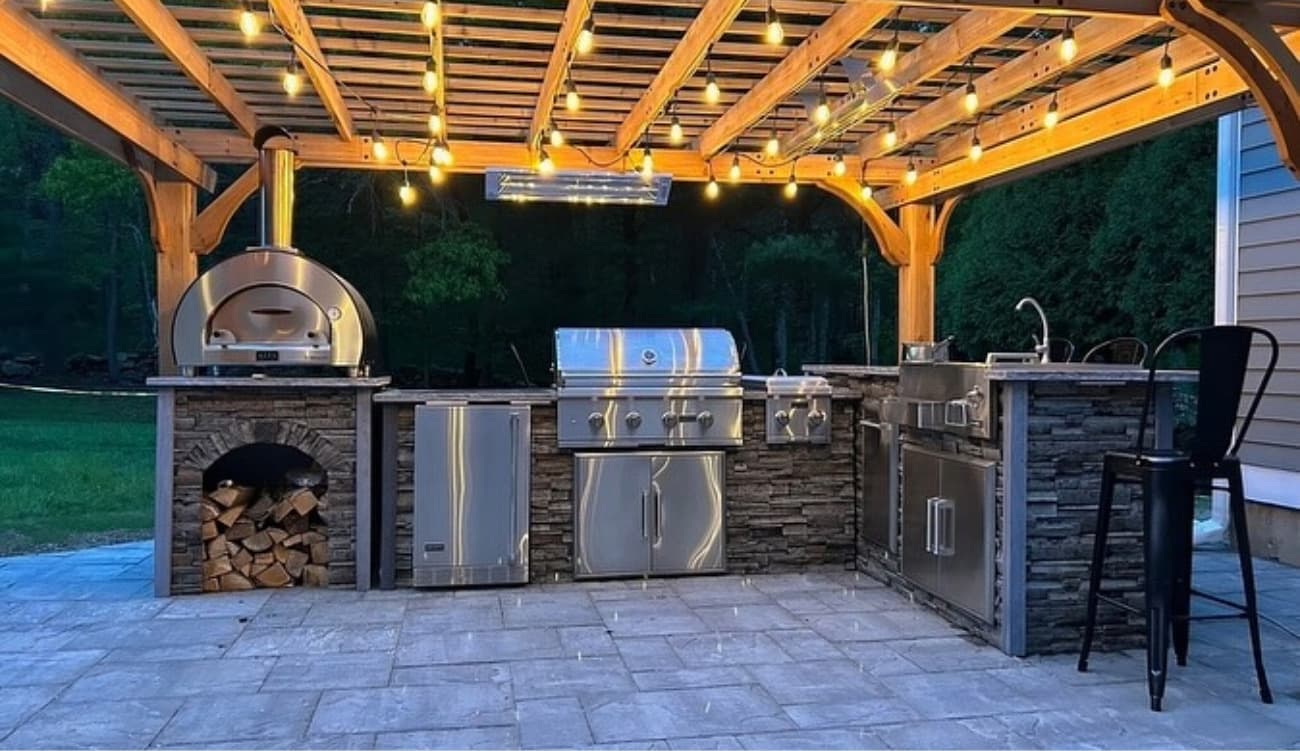
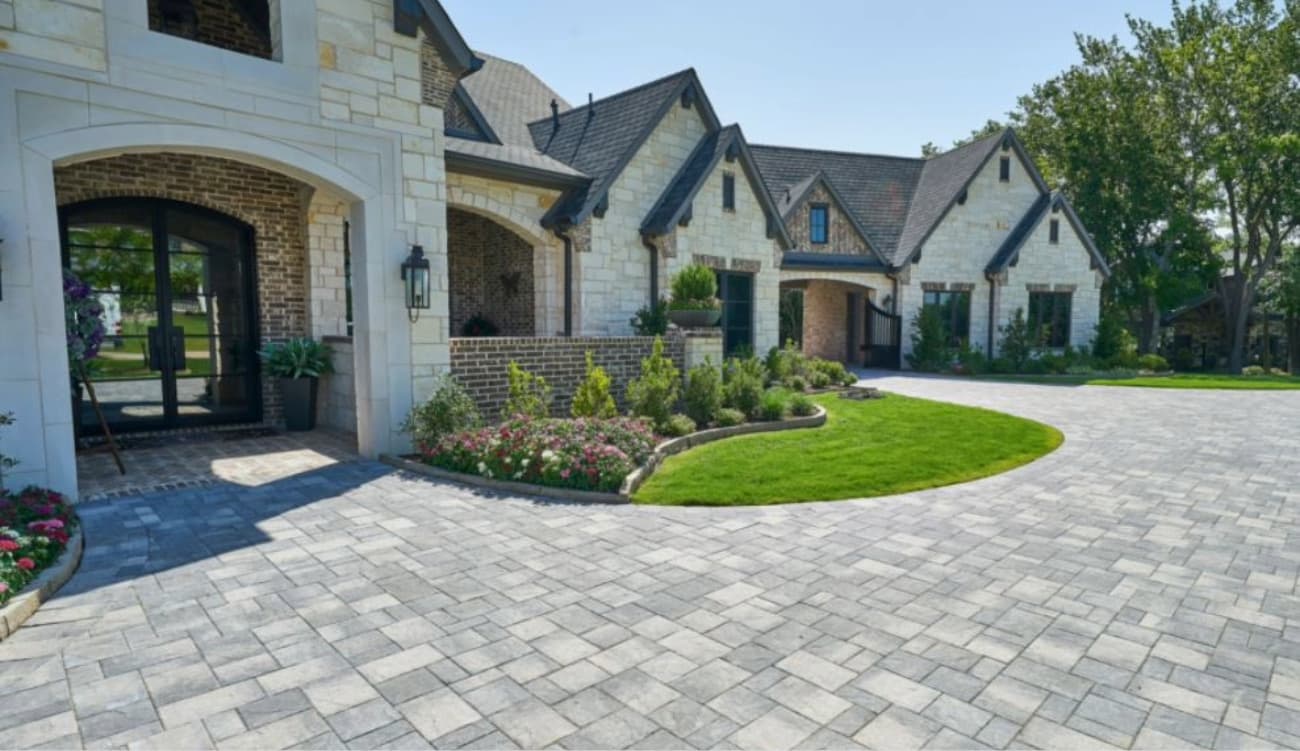
When the original slab is in good shape, extending it is the most efficient way to gain space. Many homeowners keep the existing concrete and wrap it with pavers, which turns a plain pad into a larger, finished-looking patio without tearing anything out.
A good extension is mostly about what you can’t see. The new section needs its own properly compacted base so it doesn’t settle at a different rate than the old slab. The grade has to carry water away from the house across both surfaces, not pool at the seam where they meet.
Matching Old and New
Fresh concrete next to old concrete almost never matches in color. That’s why many extensions use a contrasting paver border or a full paver section instead of trying to blend gray into gray. A deliberate change in material looks designed, while a near-match looks like a patch.
Extending a Pool Deck
The same rules apply around a pool, with a few more to watch. The extension has to respect the coping and the pool’s edge, stay slip-resistant when wet, and shed splash water away from both the pool and the house.
Option 2: Put a Roof Over It
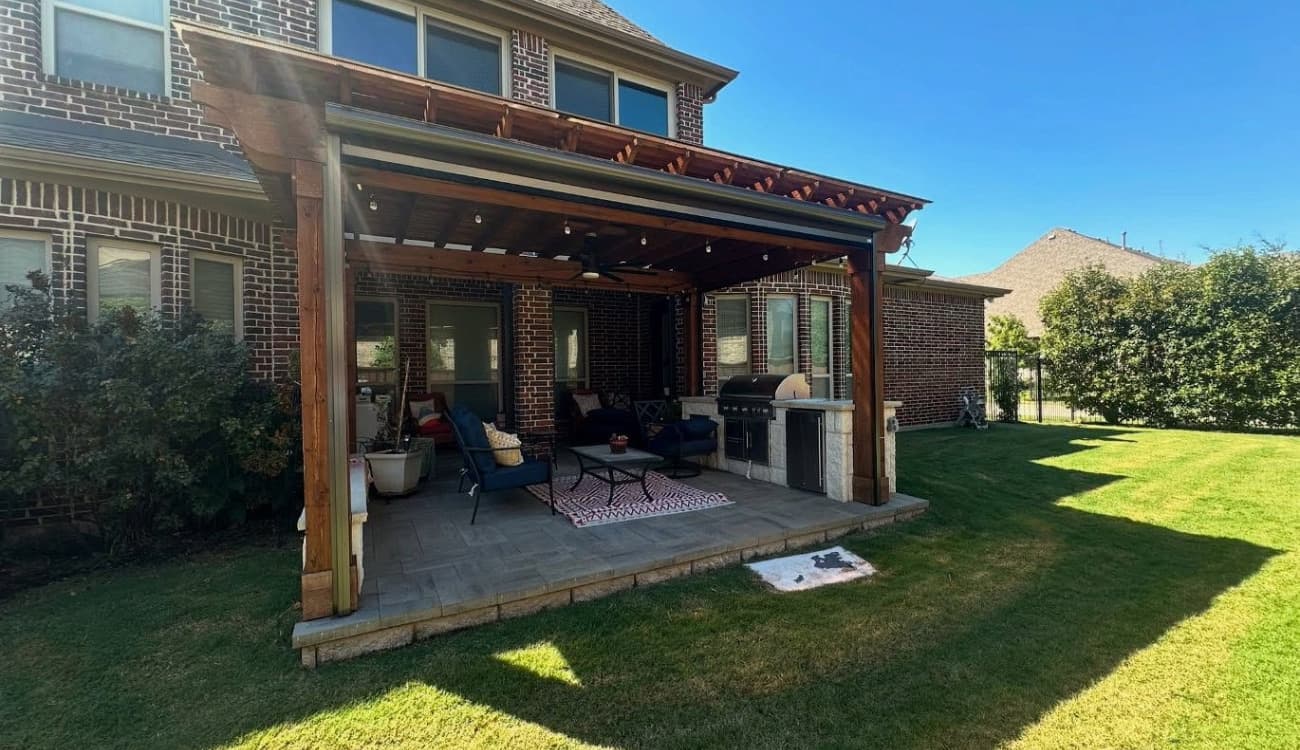
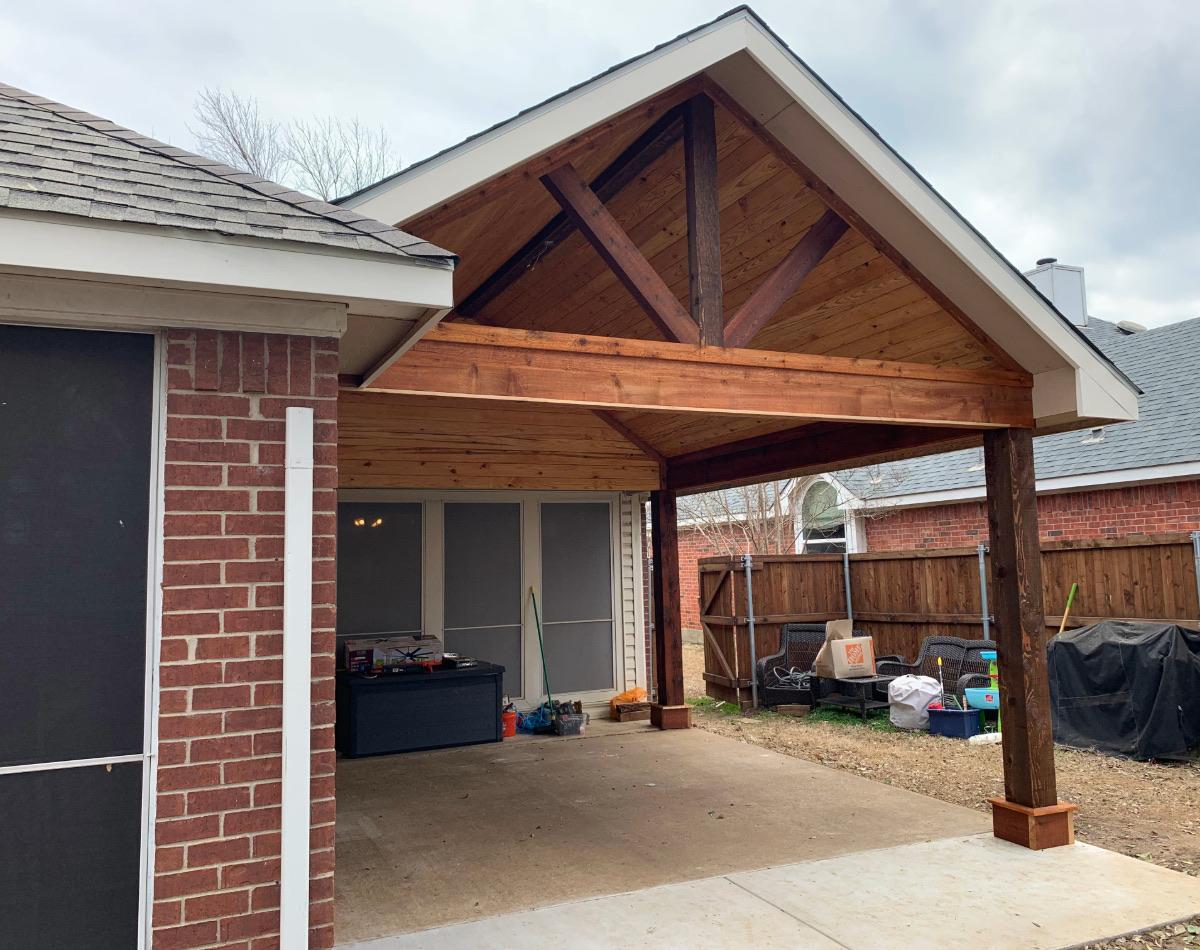
Sometimes the patio is big enough. The real problem is that it bakes from June through September. In that case, a cover often adds more usable time outdoors than extra square footage would.
An attached patio cover ties into the house, so the connection to the existing roofline and wall has to be planned carefully. The posts also need proper footings. A thin, aging slab may not be able to carry them, which is one more reason to check the patio’s condition first.
Patio Cover or Pergola?
A solid patio cover blocks sun and rain, so the space works in more kinds of weather. A pergola is open or slatted overhead and gives filtered shade with more airflow and a lighter look. Patio covers can be built in wood, aluminum or steel, depending on the style of your home and how much upkeep you want.
Option 3: Tear Out and Rebuild
If your walk-through turned up several of the warning signs above, building onto the old slab usually means building onto its problems. Cracks keep moving, low spots keep holding water, and a new extension or cover inherits all of it.
Starting over lets you fix drainage, set the right slope and size the space for how you actually use it. It also opens up options that are hard to add later, like built-in seating walls, a fire pit or a walkway that ties the patio into the rest of the yard.
Questions to Settle Before You Build
Whichever path you choose, a few details are worth sorting out early:
- HOA approval: Many neighborhoods require approval for covers and larger patios, so check before design is final.
- Permits: Covers and structural work often need one. Ask your contractor who pulls it.
- Utilities and irrigation: Sprinkler lines, gas lines and drains near the house may need to move.
- Roof drainage: Gutters and downspouts should send water away from the new space, not onto it.
- Access: Crews and materials need a way into the backyard, which matters on tight lots.
Choosing a Porch or Patio Contractor
A contractor who only quotes square footage isn’t looking at the whole job. The right team will want to see the existing patio in person, check slope and drainage, and talk through how you plan to use the space.
Holistic Patio starts every project with a free on-site consultation, then creates custom design renderings so you can see the finished patio, cover or pergola before work begins. We handle the planning and permit paperwork as part of the process. We work across Fort Worth and Tarrant, Denton, Wise and Parker counties, from North Richland Hills to Trophy Club.
Frequently Asked Questions
Can you extend an existing concrete patio with pavers?
Yes, as long as the existing slab is stable. The pavers need their own compacted base, and the new section should be graded so water drains away from the house across both surfaces.
Will new concrete match my old patio?
Rarely. Concrete changes color as it ages, so new and old sections usually look different. A paver border or paver extension creates an intentional contrast instead of a visible patch.
Can a patio cover be added to my existing porch?
Often, yes. The cover has to tie into your house correctly, and the posts need solid footings. If the slab is thin or failing, it may need repair or replacement first.
How do I know if my patio needs to be rebuilt instead of extended?
Wide or uneven cracks, standing water, a slope toward the foundation, or sinking edges are all signs the base has problems. Extending onto a failing slab usually carries those problems into the new space.
Do I need HOA approval to extend or cover my patio?
Many neighborhoods require it, especially for patio covers and other structures. Check your HOA guidelines early so the approved design matches what gets built.
Ready to Make More of Your Backyard?
Whether you want to add on, cover up or start fresh, we’ll help you figure out what your existing patio can support and design the right next step. Call (682) 244-4944 or book a free on-site estimate to get started.
Book Your On-Site Estimate